

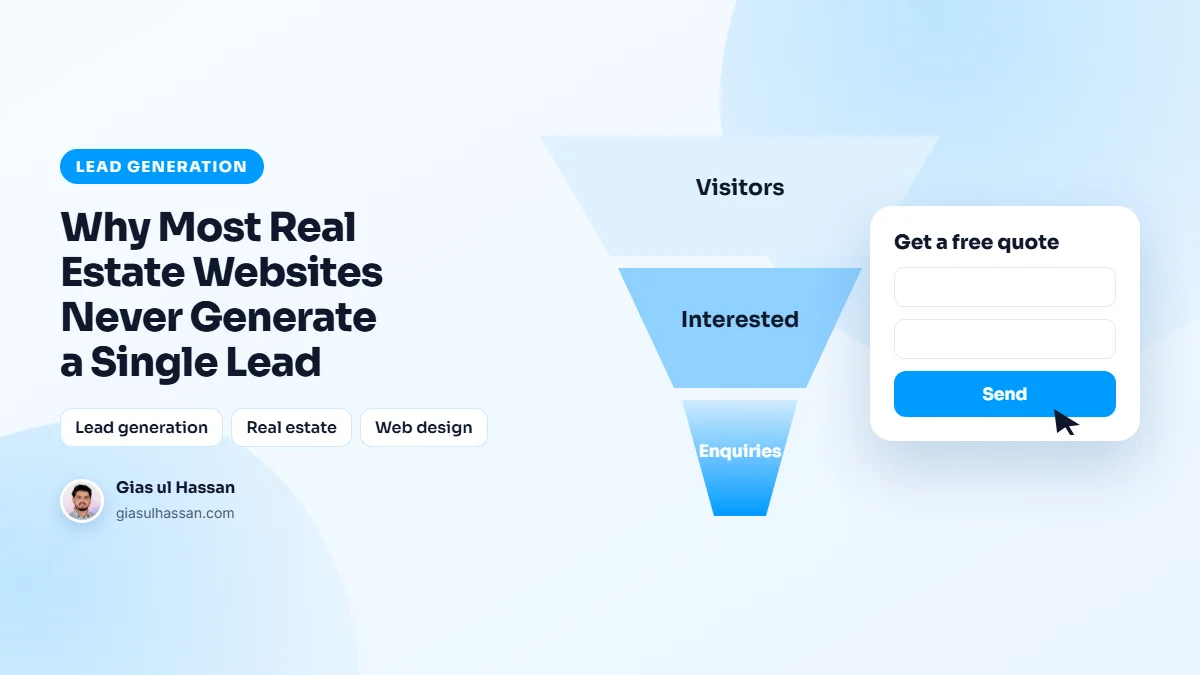
Most real estate websites do one thing: show properties. They look fine, the listings are there, and yet months go by without a single lead that came from the site. The problem is that a list of properties is a brochure, and a brochure does not ask for anything. A visitor browses, closes the tab, and you never know they existed.
The sites that generate leads are built around capture, not just display. Every page gives the visitor a reason and a way to raise their hand: a home-valuation request for sellers, a viewing or enquiry form on every listing, a clear call to speak to an agent. The listings draw people in, but the lead is what you are actually there to win, and most sites simply forget to ask.
Why listings alone do not bring in leads
Property portals have trained buyers to browse. They scroll, save, compare and leave, and they do exactly the same on your site. A listing page with photos, a price and a phone number tucked in the footer gives them nothing to do except keep browsing. The visitor is interested, but not yet ready to call a stranger, and the site offers no smaller step.
That smaller step is the whole game. Most people are not ready to book a viewing on their first visit. They might be ready to get an alert when a similar home comes up, read a short guide to an area, or ask one question about a property. A site that offers those low-commitment steps collects contacts from people who would otherwise vanish.
The two leaks that cost you the most
The first is the seller side. Buyers get all the attention, but sellers are where the commission is, and a simple free-valuation request turns a curious homeowner into a lead worth chasing. If your site has no way for someone to ask what their home is worth, you are leaving your best leads on the table.
The second is follow-up. Even sites that capture a lead often dump it into an inbox where it sits until it goes cold. Leads should flow straight into a CRM with the follow-up ready to go, because in real estate the agent who replies first usually wins. A form that nobody actions is barely better than no form at all.
What a real estate website needs to generate leads
Here is the checklist I work through when an agency site gets traffic but no enquiries. None of it is exotic, and most of it can be added to the site you already have.
- An enquiry form on every listing. Prefill the property reference so the visitor never has to type which home they mean. Keep it to name, contact and a short message.
- A free valuation page for sellers. Ask for the address and a way to reach them, then say who will follow up. Link to it from the homepage and the main menu.
- Property alerts. Let buyers leave an email or number to hear about new listings that match their search. It is the easiest yes you will ever ask for.
- A visible phone number and a WhatsApp link. Many buyers would rather message than fill in a form, especially on a phone.
- Area pages. A clear page for each neighbourhood you cover helps you get found in local searches and shows real local knowledge.
Forms deserve particular care, because they are where interest becomes a lead or quietly does not. If your enquiry forms get views but few submissions, my guide on why visitors don’t fill out your contact form covers the fixes. Nielsen Norman Group’s form design guidelines explain why shorter, clearer forms tend to get finished.
Follow-up is part of the website
Agents often treat the website and the follow-up as separate jobs. They are not. The site should send every lead somewhere it gets actioned, tagged with what the person asked about, the listing they were viewing and whether they are buying or selling. That context lets the agent reply with something useful instead of a generic thank-you.
In practice that means a few simple pieces working together:
- The form sends the lead into a CRM, not only into an inbox.
- The visitor gets an instant confirmation saying who will contact them and roughly when.
- The assigned agent gets a notification on their phone, with the listing attached.
- Leads nobody has answered get flagged, so nothing sits untouched over a weekend.
The same principle applies in any field where clients choose quickly and only call once. Law firms face a very similar problem, and the website mistakes costing law firms their best clients map closely onto what goes wrong on agency sites.
Getting found before you can capture anything
Capture only works if people arrive. Many agency sites rank for their own name and little else, because most pages are listings that disappear once the property sells. Pages that last, such as area guides, a seller’s guide and a page for each service you offer, give search engines something stable to rank. Google’s own SEO starter guide is a sensible place to learn the basics.
This is also where a template starts to show its limits. Most off-the-shelf property themes are designed to display listings, not to capture and route leads, and bending one into shape can take more effort than building it properly. I explain that trade-off in why a custom website beats a template for a local business.
A quick audit you can run today
Open your own site on your phone and pretend you are a homeowner thinking of selling. Can you find a way to ask what your home is worth within a few seconds? Now pretend you are a buyer looking at one listing. Is there a form or a message button right there, or do you have to hunt for a contact page?
Then send a test enquiry and note how long it takes for someone to reply. If the answer is hours, or never, the leak is in follow-up rather than design. Fix whichever one you find first, then run the test again next month.
None of this requires a fancy rebuild. It requires treating the website as a lead machine instead of a digital window display. If you want to see what that looks like in practice, I cover it on my real estate website development page. Get the capture and follow-up right and the same traffic you already have starts turning into actual buyers and sellers.